
By Our Reporter
SOROTI - Ateker communities from Uganda, Kenya, South Sudan and Ethiopia are turning to football and other sporting activities as a way of healing historical wounds, rebuilding trust and promoting peace across borders.
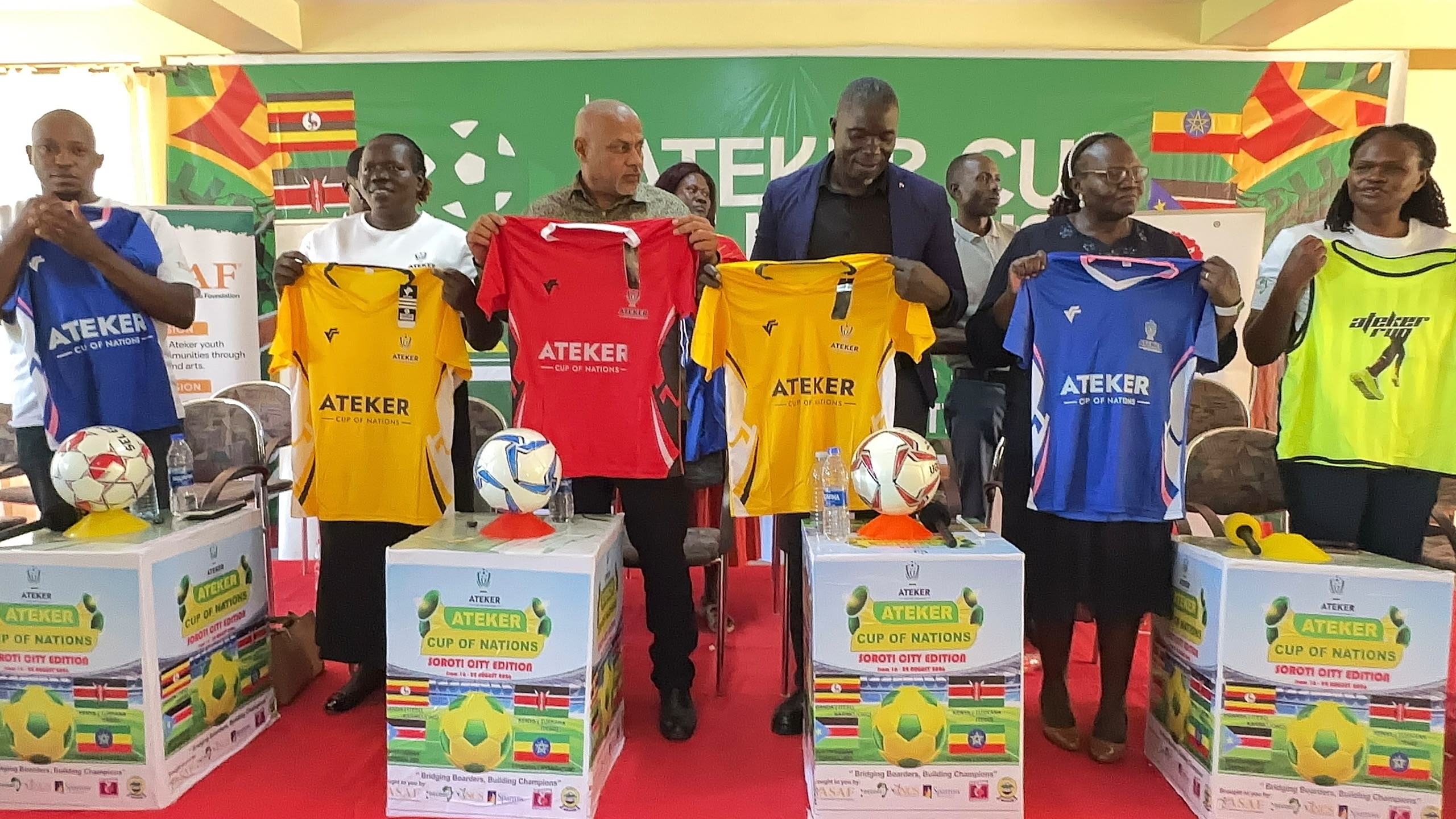
The initiative is being spearheaded through the Ateker Cup of Nations, organised by the Ateker Sports and Arts Foundation (ASAF) in partnership with the Destiny Community Development Initiative (DECODI), the National Council of Sports and Soroti City.
The tournament will run from August 16 to 22 in Soroti under the theme “Bridging Borders, Building Champions.”
Speaking during a press briefing at Sparrow Hotels in Soroti, ASAF Chief Executive Officer Isaac Olupot said the tournament was conceived as a sports diplomacy initiative aimed at addressing longstanding conflicts and mistrust among Ateker communities.
Olupot said the Ateker Cup, which initially started as a regional competition in Teso, Uganda, has now grown into an international tournament bringing together Ateker groups from four countries.
“The Ateker Cup graduated from a regional tournament into an international tournament bringing together all Ateker groups,” Olupot said.
The participating communities include the Kumam, Iteso, Karamojong, Turkana and Teso groups from Kenya, as well as the Toposa and Nyangatom communities from South Sudan and Ethiopia, among others.
Organisers also said the Lango community from South Sudan joined the competition shortly before registration closed.
More than 1,400 football players are expected to travel to Soroti for the tournament, with thousands of additional visitors and residents expected to participate in the peace marathon and other activities.
Olupot said the tournament was born out of the need to use sport to overcome years of conflict and mistrust among Ateker communities.
“For quite many years, Ateker has fought itself, Iteso fighting Kumam, Kumam fighting Iteso, Karamojong fighting Iteso and Karamojong fighting Toposa,” he said.
He added that organisers had brought together football, a peace marathon, cultural activities and a leadership summit under one programme to promote reconciliation and strengthen relations among the communities.
The peace marathon will be held on August 16, followed by the official opening of the tournament.
The opening football match will see Lango face Teso at Soroti Oligoi Stadium, while defending champions Ngora will take on a Kenyan side in another opening fixture.
For the first time, the tournament will also feature a women’s competition.
According to Daniel Otim, director of the technical committee, about 48 teams had met the requirements to participate, including eight women’s teams.
The men’s competition will have eight groups, while the women’s teams will be divided into two groups.
Soroti Stadium will host the opening match and the finals, while other matches will be played at Soroti Sports Ground, Pioneer Primary School, Soroti Secondary School and Hildas Primary School.
Otim said experienced referees had been secured to ensure that the matches are properly officiated.
Anne Elotu, founder and director of DECODI and proprietor of Sparrow Hotels, said the participation of women was critical to building lasting peace in the region.
She said the tournament was not merely about competition but also provided an opportunity for healing, unity and the empowerment of young women.
“For us, this tournament is not just about women. It is about peace, unity and healing,” Elotu said.
She urged young people to take ownership of the tournament and use it to promote the region rather than undermine it.
Elotu said improved relations among Ateker communities could also create opportunities for trade, investment and better infrastructure across borders.
She added that religious leaders, including bishops, had expressed support for the event and would participate in activities linked to the tournament and the Teso Regional Leadership Summit.
John Odongo, FUFA chairperson for the North Eastern Region covering Teso, Karamoja and Sebei, said the tournament was consistent with football's efforts to promote mass participation in the sport.
He said the tournament had grown beyond the regional level and would require coordination with relevant football authorities because teams from several countries were taking part.
Odongo urged players, officials and fans to accept that mistakes are part of football and cautioned against accusing referees of corruption whenever a decision goes against a team.
“Football is a game of emotions,” he said, urging organisers to remain firm and focused on their vision.
He also appealed to participating communities to treat the tournament as their own and work together to make it successful.
Beyond football, the tournament will feature traditional games, cultural exhibitions and a carnival.
Activities will include Omweso, traditional wrestling and other indigenous games aimed at celebrating the shared heritage of the participating communities.
Cecilia Nyakoit, chairperson of the Ateker Cup of Nations coordinating committee, said the National Council of Sports would provide equipment, including balls and nets for both the men’s and women’s competitions.
She urged the media to give the tournament extensive coverage, saying it offered an opportunity to showcase Ateker's sporting talent, culture and cuisine.
Local food will also be displayed during the finals, including traditional dishes such as emagira, ecadoi, ecomai, eboga and emuna from the participating communities.
For Soroti City, the tournament is also expected to provide an economic opportunity, with thousands of visitors projected to arrive from across the region.
Deputy Mayor Hellen Christine Amongin urged residents and the business community to take advantage of the influx of visitors by providing goods and services while maintaining discipline and security.
“This Ateker Cup is an opportunity for us,” she said, adding that the city would work with organisers to ensure security and cleanliness throughout the event.
Soroti City East Mayor Abdul Latif Wali said the tournament could help strengthen cross-border business links and attract investment to the city.
He urged residents to take advantage of the visitors by engaging in small businesses such as selling food, drinks and other commodities.
“This is our advantage,” he said. “If we don’t get up to build our city, nobody is coming to build it for us.”
Wali also said the cultural component of the tournament would help communities better understand their shared heritage and strengthen the identity of the wider Ateker people.
The football tournament will also be accompanied by the Teso Regional Leadership Summit, bringing together political, religious and community leaders to discuss the region’s development and future.
Organisers said the summit would provide an opportunity for leaders to reflect on ways of strengthening unity and development among Ateker communities.
The grand finale will feature the women’s and men’s finals, followed by an awards ceremony and the Ateker Carnival.
With thousands of visitors expected in Soroti during the week-long event, organisers hope the tournament will leave a lasting impact beyond the football pitch.
For Olupot, the Ateker Cup represents more than competition for trophies.
“This is our World Cup. This is our Cup of Nations for the Ateker people,” he said.
The organisers hope that when the final whistle is blown, the tournament will have achieved a goal beyond football by bringing communities that have historically been divided closer together and laying a stronger foundation for peace, unity and cooperation across borders.








Copyright ©Teso Vibez is a brand of Teso Vibez Digital (u) Ltd
.
