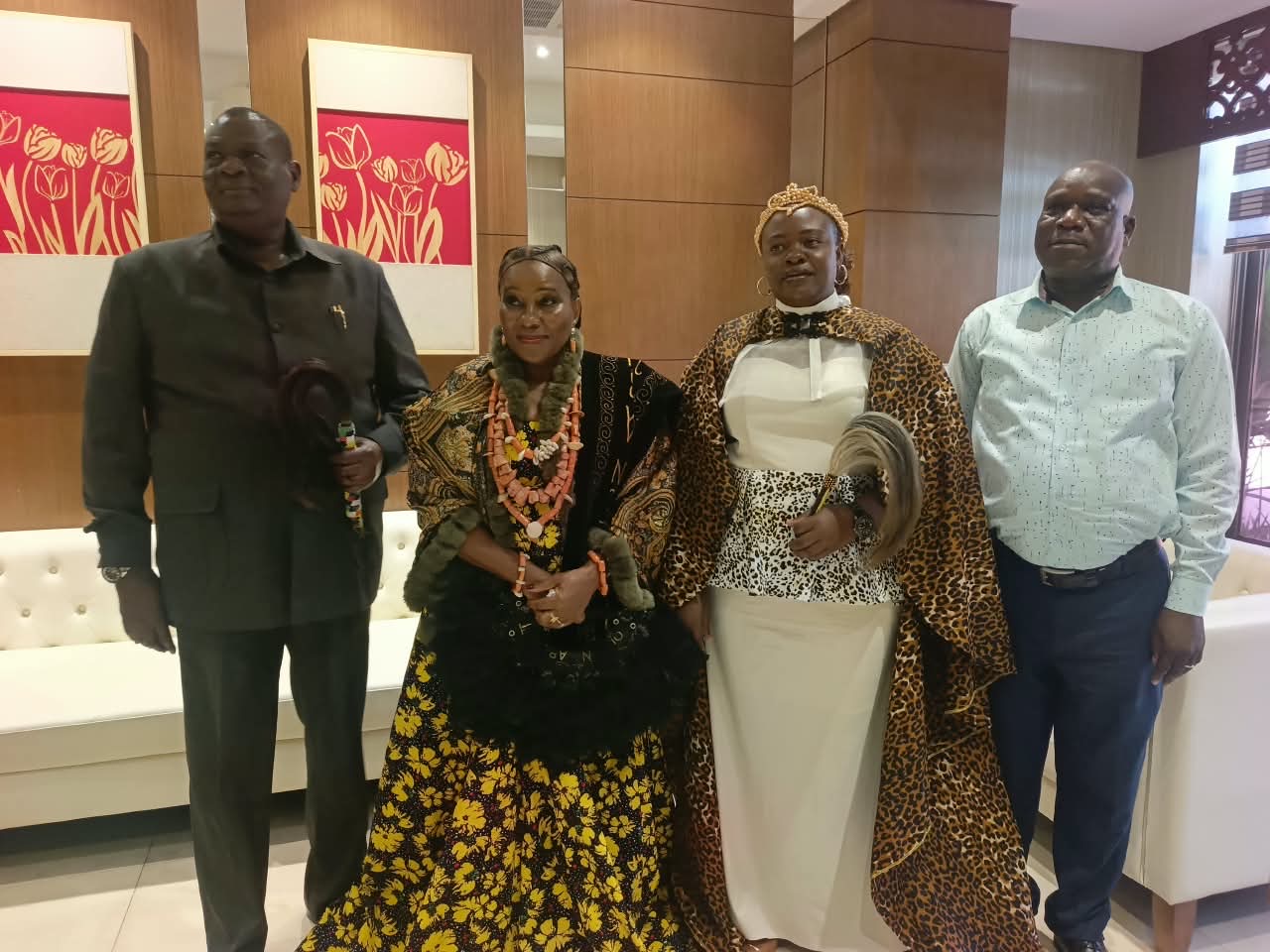
A high-level cultural engagement in Kampala has brought together traditional leaders from Uganda and Nigeria to explore ways of using culture as a powerful platform for African unity, peace, community development and stronger people-to-people relations.
The meeting, held at Hotel Africana, brought together His Highness Papa Emorimor Paul Sande Etomeileng Emolot, the Iteso cultural leader, Her Majesty Toto Akaliait Juliet Among, and Her Majesty Queen Aruk II, also known as Obonganwan Marie Ikpeme Erete, a female traditional ruler from the Eyong Abatim community of Odukpani Local Government Area in Cross River State, Nigeria.
The engagement focused on strengthening cultural relations and creating avenues for traditional institutions to work together beyond national borders. The leaders shared experiences on traditional leadership and examined possible areas of cooperation in cultural preservation, community development, youth empowerment, peacebuilding and the promotion of African identity.
At the heart of the discussions was the idea of uniting Africa through the cultural umbrella, with the leaders recognizing the unique position of traditional institutions in connecting communities and preserving values that transcend political and geographical boundaries.
For the participants, culture presents an opportunity to bring African communities closer together by promoting shared values, mutual respect, dialogue and peaceful coexistence.
His Highness Papa Emorimor Paul Sande Emolot called for a stronger role for cultural leaders in transforming society, emphasizing peace and unity as a collective responsibility.
“We as cultural leaders globally shall advocate for peace and unity. This will be the key contribution to our people and we shall push for it,” Papa Emorimor said.
The Iteso cultural leader’s message places traditional institutions at the centre of efforts to build peaceful and united communities, while encouraging cultural leaders across Africa to look beyond their individual communities and contribute to a broader continental agenda.
Her Majesty Toto Akaliait Juliet Among, meanwhile, brought the wellbeing of the girl child into the discussions, emphasizing the need for deliberate efforts to protect, support and empower girls and women.
Her advocacy is closely aligned with the work of the Akaliait Development Foundation, which seeks to advance initiatives aimed at improving the welfare and opportunities of women and girls. The emphasis on the girl child adds a social-development dimension to the broader cultural unity agenda, recognizing that Africa’s transformation must also involve investing in its young people.
The engagement also provided an opportunity for the leaders to explore potential partnerships that could translate the discussions into practical programmes benefiting communities.
The anticipated areas of cooperation include cultural exchange, youth development, empowerment of women and girls, preservation of African heritage, peacebuilding and strengthening relations between traditional institutions.
The Kampala meeting therefore marks a significant step towards exploring a wider network of traditional leadership across Africa, with the participating leaders expected to continue discussions on concrete areas of collaboration.
As Africa searches for ways to strengthen unity and development, the leaders’ message is clear: culture can serve not only as a custodian of identity and heritage, but also as a bridge connecting African communities and advancing peace, unity and shared prosperity.