
By James Alomu
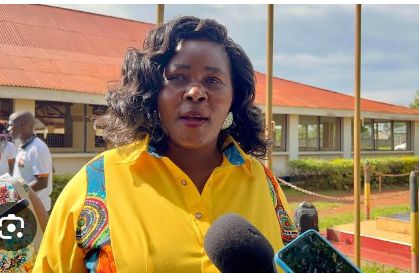
A tense courtroom session unfolded at Soroti High Court as Anyimo Harriet faced questions over the votes she allegedly lost while challenging the election of Peter Edopu Edeku as Member of Parliament for Dakabela County.
The election petition hearing, presided over by Justice Dr. Ginania Melody, focused on allegations of electoral irregularities, discrepancies in declaration forms and the petitioner's claims regarding the tallying of votes.
During the proceedings, Anyimo, who is challenging Edopu Edeku's victory, was asked to explain the specific number of votes she claimed to have lost and how the alleged irregularities affected the final election results.
However, the petitioner reportedly struggled to provide a comprehensive account of the disputed votes, drawing attention to the need to establish how the alleged irregularities may have influenced the outcome of the election.
Anyimo identified nine votes from Katine Primary School as votes she believed had been lost. She also raised concerns about inconsistencies in declaration forms, alleging that some documents were incomplete and contained variations in handwriting and authorship.
Despite raising these concerns, the petitioner acknowledged that the margin by which she lost the election was 1,408 votes, a figure that remains central to the dispute over the validity of the electoral outcome.
In his defence, Edopu Edeku denied having any knowledge of electoral irregularities, saying that no one had brought any complaints about the alleged malpractice to his attention.
The incumbent legislator expressed confidence that he would retain his parliamentary seat, arguing that the petitioner had failed to clearly establish the number of votes she claimed to have lost.
Edeku further denied participating in any electoral malpractice, maintaining that voters had freely chosen him during the election.
The court also heard testimony from David Calvin Ecodu, the NRM vice-chairperson for the Eastern Region, who appeared as a defence witness.
During cross-examination, the petitioner's lawyers questioned Ecodu about whether he had used his political position to influence election proceedings.
In response, Ecodu explained that he went to check the presidential election results on the morning after polling day. He said his role was to ensure that votes cast for the President were protected and explained that he had made inquiries because presidential election results were expected to be announced within 24 hours.
His testimony formed part of the defence's efforts to respond to concerns raised during the petition hearing.
As the legal battle continues, Justice Dr. Ginania Melody directed the parties to file their further submissions by November 1, emphasising the need to comply with the timelines for hearing and determining the election petition.
The directive sets the stage for the next phase of the proceedings as the court considers the arguments and evidence presented by both sides.
The dispute places the spotlight on the electoral process in Dakabela County, with Anyimo seeking to challenge Edopu Edeku's victory while the incumbent maintains that his election was legitimate.
The final determination rests with the court, which will consider the evidence and legal arguments before reaching its decision.







Copyright ©Teso Vibez is a brand of Teso Vibez Digital (u) Ltd
.
