
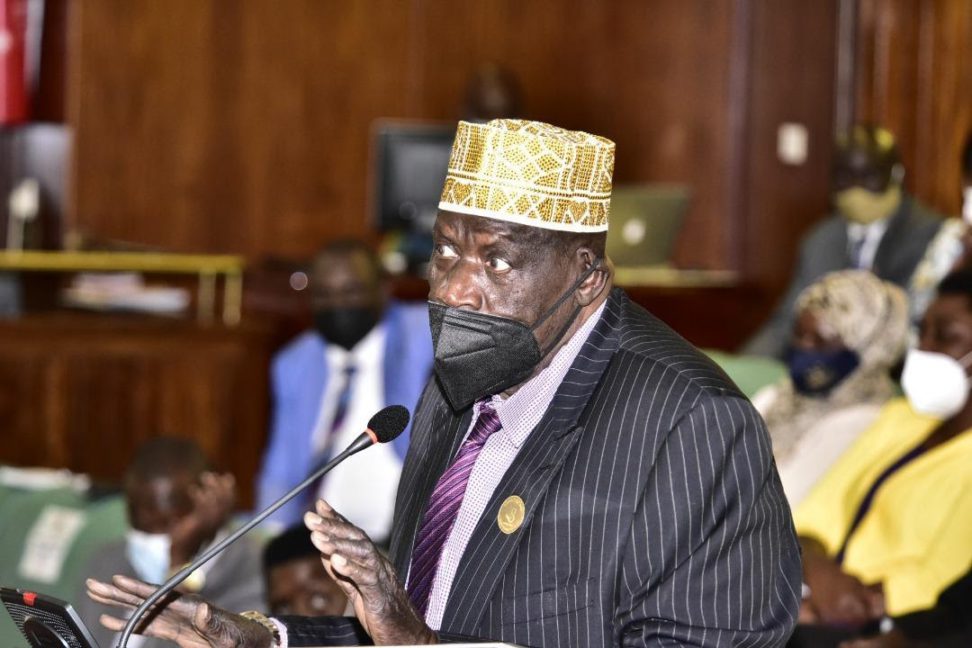
The General for all seasons who transcended the military and political statesmanship to peacemaker was 87 and had only in January retained his seat in Adjumani West County.
His family says Ali was admitted with unspecified ailments and had gone into a coma before his death.
Former NRM national vice chairperson for Eastern Uganda Capt Mike Mukula confirmed Gen Ali had died at Nakasero Hospital at around 4:45pm on Saturday.
"It is with profound sorrow and a heavy heart that I have recieved the sad news of the passing of my dear friend , distinguished patriot, freedom fighter and statesman, Gen Moses Ali who departded this life today at 4:25pm at Nakasero Hospital," Mukula said in a post on X.
Gen Moses Ali's death brings to a close the remarkable journey of a man who occupied almost every major role in Uganda's military and political evolution—from soldier and cabinet minister to rebel leader, peace negotiator, deputy prime minister and elder statesman.
At the time of his death, Ali had only recently left active government after President Museveni, in May 2026, omitted him from the new Cabinet on medical grounds. His son, Siraji Musa Ali, was subsequently appointed Minister of State for Works and Transport, a move widely viewed as recognition of the family's long service to the NRM government.
Born on April 5, 1939, in Atabo Parish, Pakele Division in Adjumani District, Ali belonged to the generation of soldiers who witnessed Uganda's transition from colonial rule to independence.
He started his career as a teacher before joining the Uganda Army in 1968. He rose rapidly under the regime of Idi Amin, training in Israel and the UK to become a Brigadier by 1974.
When Idi Amin seized power in January 1971, Ali became one of the new regime's most influential military and political figures.
He served in several senior ministerial positions, including Minister of Finance and later Minister of Tourism, Wildlife and Antiquities, among other portfolios. He was also closely associated with the military establishment that sustained the regime through years of internal dissent and regional conflict.
Following the fall of Idi Amin in 1979, Ali went into exile in Sudan. Rather than retreat from politics, he returned to armed struggle.
He founded the Uganda National Rescue Front (UNRF), one of several rebel movements opposing successive governments in Kampala during the early 1980s.
Operating largely in the West Nile region, the UNRF fought the Uganda National Liberation Front government and later the administration of Milton Obote.
Years of conflict devastated West Nile, leaving thousands displaced and infrastructure destroyed.
Recognising the need for reconciliation after capturing power in 1986, President Museveni pursued negotiations with several insurgent groups.
Ali became one of the first major rebel leaders to sign a peace agreement with the NRM government.
The 1988 peace accord integrated UNRF fighters into the national army, marking one of Uganda's earliest successful post-war reintegration processes.
The agreement is widely regarded as laying the foundation for lasting peace in West Nile after years of instability.
Following the accord, Ali joined the NRM government and steadily became one of Museveni's closest and most trusted political allies.
He served in numerous senior government positions over nearly four decades.
Among the offices he held were:
.Deputy Prime Minister;
Throughout his time in government, Ali remained deeply involved in efforts to consolidate peace in northern Uganda and West Nile.
Government officials frequently credited him with persuading former combatants to embrace reconciliation and supporting programmes that resettled displaced communities after years of insurgency.
His influence extended beyond military affairs.
As Minister for Relief and Disaster Preparedness, he oversaw Uganda's refugee policy during a period when the country became one of Africa's largest refugee-hosting nations.
He championed Uganda's internationally recognised settlement model, which grants refugees access to land, education and healthcare alongside host communities.
In Cabinet, Ali was known for his measured interventions and institutional memory.
Having served under multiple administrations, he was often regarded as a bridge between Uganda's different political eras.
Although advancing age gradually reduced his public engagements, he remained an influential figure within both government and the military establishment.
His final years were marked by recurring health challenges that occasionally kept him away from Parliament and Cabinet meetings.
Following the 2026 general elections, he asked President Museveni to excuse him from further ministerial duties during Cabinet formation, citing the need to rest because of his health.





Copyright ©Teso Vibez is a brand of Teso Vibez Digital (u) Ltd
.