
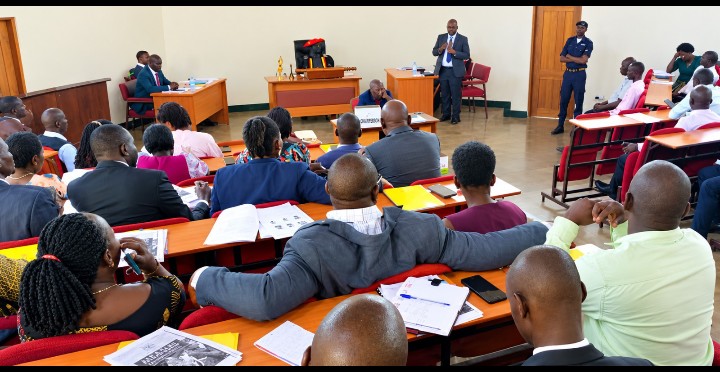
Kumi District leaders have warned that government restrictions on additional school charges are exposing serious funding gaps in government schools, with some institutions reportedly laying off locally employed teachers and struggling to provide meals for learners.
The leaders say the decision to discourage schools from collecting additional contributions from parents has created a difficult situation because government capitation grants do not cover several essential costs that schools have traditionally met through Parent-Teacher Association (PTA) support.
They fear that unless alternative funding is provided, teacher shortages, reduced access to meals and other operational challenges could disrupt teaching and learning across the district.
Samuel Akol, the Kumi District Councillor representing Kanyum Town Council and a teacher by profession, described the situation as a serious concern for education in Kumi, the Teso sub-region and Uganda at large.
Akol said funding provided through Universal Primary Education (UPE) and Universal Secondary Education (USE) programmes was insufficient to meet all the needs of schools, including feeding learners and employing teachers who are not on the government payroll.
According to Akol, schools have traditionally relied on contributions from parents to support activities such as feeding learners, constructing teachers’ accommodation and dormitories, and paying additional teachers.
He warned that removing such contributions without providing alternative funding could force schools to lay off locally employed teachers and discontinue meals for learners.
“Schools have already started laying off teachers who are being paid locally,” Akol said, adding that some learners were reportedly leaving school at lunchtime because they could no longer access meals.
He said hungry learners could struggle to concentrate in class, potentially affecting their academic performance.
“As a parent, as a leader and as a concerned citizen, we should be very concerned,” Akol said, calling for a balance between government education policies and the practical needs of schools.Kasadha said the government was preparing to disburse capitation grants based on the number of learners enrolled and attending school.
He explained that officials were expected to conduct a headcount before determining the amount each school would receive.
However, Kasadha said schools were also struggling because PTA funds had previously been used to employ teachers who were not on the government payroll.
“With no money coming in, the schools have also decided to release those teachers because they cannot afford to pay them,” Kasadha said.
He warned that the reduction in teaching staff could increase workloads and leave learners without some lessons.
Kasadha clarified that the capitation grant is intended to support scholastic materials and other school operational costs rather than feeding learners.
He said feeding remained the responsibility of parents and encouraged them to organise individually or collectively to ensure their children have access to food.
Ismael Hamwada Pinto, the Kumi Resident District Commissioner, urged schools and parents to follow the existing government guidelines until further direction is issued by the Ministry of Education and Sports.
Pinto said he would engage parents to explain the government’s policy and ensure that communities understood the guidelines.
The debate over additional school charges comes amid growing concerns in Kumi about teacher shortages, school feeding, attendance and the ability of government schools to meet their operational needs under the current funding arrangements.
While district leaders acknowledge the need to protect parents from excessive financial demands, they are calling for clearer guidance and adequate government funding to ensure that restrictions on PTA contributions do not undermine teaching and learning.
SOURCE CREDIT - TNN







Copyright ©Teso Vibez is a brand of Teso Vibez Digital (u) Ltd
.
