

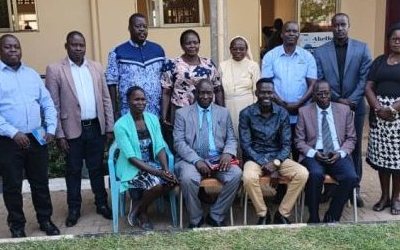
Speaking during a community engagement in Serere, Hon. Acom said the prolonged dry spell has crippled agriculture, dried up water sources, and devastated fishing activities, leaving thousands of households struggling to survive.
The legislator warned that the region, long regarded as one of Uganda's food-producing hubs, is facing one of its most difficult seasons in recent memory as unpredictable weather patterns continue to undermine livelihoods.
"Our people are living through an emergency. Gardens have dried up, water sources are disappearing, and families that once depended on farming and fishing can no longer provide for themselves. This is not an ordinary dry season—it is a climate crisis that requires urgent national attention," Hon. Acom said.
She noted that women, children, and the elderly are bearing the greatest burden, with many households surviving on a single meal a day after crops withered before maturity.
According to the MP, the crisis has also spread to fishing communities around Lake Kyoga, where falling water levels and changing environmental conditions have significantly reduced fish stocks and daily catches.
Hon. Acom said fishermen operating from landing sites including Labor, Kadungulu, and Pingire are increasingly returning home with nearly empty nets, depriving families of one of their last remaining sources of income after agriculture failed.
"Fishing became our people's fallback when the gardens stopped producing. Today, both the gardens and the lake are failing them. Parents are struggling to pay school fees, put food on the table, and meet basic household needs," she said.
The decline in fish production has also affected women involved in fish processing and trade, with many reporting collapsing businesses as supplies dwindle and prices continue to rise beyond the reach of ordinary consumers.
Hon. Acom called on the Government, humanitarian agencies, and development partners to urgently provide relief food to the worst-hit communities while accelerating investment in long-term climate adaptation measures.
She appealed for increased funding for irrigation schemes, valley dams, water harvesting technologies, and reliable boreholes to reduce dependence on rain-fed agriculture, which has become increasingly vulnerable to climate change.
"The answer is no longer waiting for the next rainy season. We must invest in irrigation, strengthen water infrastructure, and equip our farmers with climate-smart agricultural technologies that will protect their livelihoods," she emphasized.
The legislator also pledged to raise the matter before Parliament and engage the Ministries of Agriculture, Water and Environment, and Disaster Preparedness to ensure Serere District and the wider Teso Sub-region are prioritized in Uganda's national drought response strategy.
Residents welcomed the MP's intervention, saying the prolonged drought has left many families relying on wild fruits, one meal a day, and support from relatives as food stocks continue to diminish.
Local leaders warn that unless immediate and coordinated interventions are undertaken, the prolonged dry spell could deepen food insecurity, increase poverty, and reverse years of economic progress in a region whose economy depends heavily on rain-fed agriculture and fisheries.
Hon. Acom concluded by urging both leaders and communities to work together in confronting the growing threat of climate change, stressing that protecting livelihoods today is essential to securing the future of Serere and the entire Teso Sub-region.



Copyright ©Teso Vibez is a brand of Teso Vibez Digital (u) Ltd
.
