
By Our Reporter
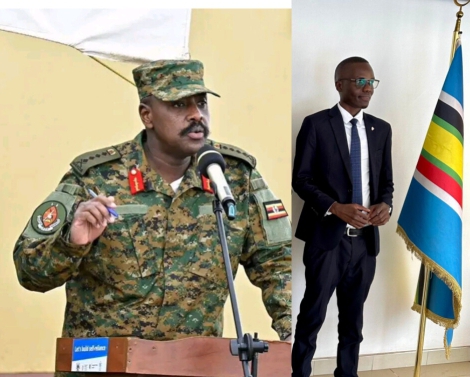
KAMPALA – Prominent Ugandan lawyer and public interest litigator Joshua Okello Patrick, popularly known as “Jokel,” has warned that he will pursue legal action against the United States government should it impose sanctions on General Muhoozi Kainerugaba, the Chief of Defence Forces (CDF).
Joshua, a Soroti-based lawyer who describes himself as a “Ugandan Watchman,” argues that unilateral sanctions imposed by foreign governments on Ugandan leaders amount to a violation of the country’s sovereignty. He says such actions undermine Uganda’s constitutional order and interfere with internal political processes.
Speaking in a recent public statement, Joshua accused Western powers of overstepping their mandate in Uganda’s domestic affairs. “The United Kingdom and the United States have provoked the wrong people,” he said. “I stand ready, as Uganda’s watchman, to defend our leaders and our nation whenever foreign states attempt to meddle in our affairs.”
Joshua has previously gained national attention for filing legal challenges against Western governments over sanctions imposed on Ugandan officials. In May 2024, he sued the UK Attorney General at the High Court in Kampala following sanctions placed on Speaker of Parliament Anita Among. When the case faced procedural setbacks, he escalated the matter to the European Court of Human Rights (ECHR) in June 2024, accusing the institution of discrimination and undue delay.
In October 2025, Joshua also filed criminal charges against an exiled music promoter, accusing him of spreading false and defamatory information concerning General Muhoozi, Capt. Mike Mukula, and President Yoweri Museveni.
Legal observers say Joshua’s potential case against the United States is likely to mirror his earlier court filings. In the matter involving Speaker Among, he sought a writ of mandamus aimed at blocking the enforcement of foreign-imposed asset freezes and travel bans within Uganda. His argument centered on the claim that sanctions are unlawful under Ugandan law when no criminal charges have been brought against the affected individuals in domestic courts.
Although critics question whether Ugandan courts can exercise jurisdiction over decisions made by a foreign sovereign state, Joshua insists that his actions are rooted in principle. He maintains that defending Uganda’s leadership and institutions from what he terms “colonial attitudes” is a constitutional and moral obligation.
Joshua’s warning comes amid heightened diplomatic strain following the January 15, 2026, general elections. In the aftermath of the polls, members of the US Senate Foreign Relations Committee called for a review of the US–Uganda security relationship and proposed stronger accountability measures targeting senior military officials.
The lawyer’s remarks signal a growing domestic legal and political pushback against international pressure, particularly from individuals and groups aligned with the First Family. As speculation over possible sanctions continues, Joshua’s threat of court action adds a new legal dimension to the evolving US–Uganda diplomatic standoff.




Copyright ©Teso Vibez is a brand of Teso Vibez Digital (u) Ltd
.